


“I Want a Smile Like Hers”
Patients often arrive with a photo on their phone. Sometimes it’s an actress, sometimes a friend, sometimes someone they follow online. They want that smile.
I understand it completely — it’s much easier to point at a picture than to describe what you want. But it’s also where I usually need to have an honest conversation, because a smile that looks beautiful on one face may not look right on another.
The photo tells me something valuable: it tells me what you find attractive. What it can’t tell me is whether it will suit you.
Why the Same Smile Doesn’t Work on Everyone
A smile isn’t a separate object you attach to a face. It sits within a face, and it either belongs there or it doesn’t.
Several things differ from person to person:
- The shape of your face and lips, and how much of your teeth actually shows when you talk and smile
- The size and proportion of your teeth relative to each other and to your mouth
- Your skin tone and eye colour, which change how a given shade of white reads
- Your age — teeth naturally have some character, and erasing all of it can look strange rather than youthful
When a smile is copied directly from a photograph without accounting for these, the result is usually the thing people describe as “obviously done.” The teeth might be technically perfect and still look wrong, because they don’t belong to that face.
The Shade Question
This is where I’m most likely to disagree with a patient, and I’d rather say so plainly.
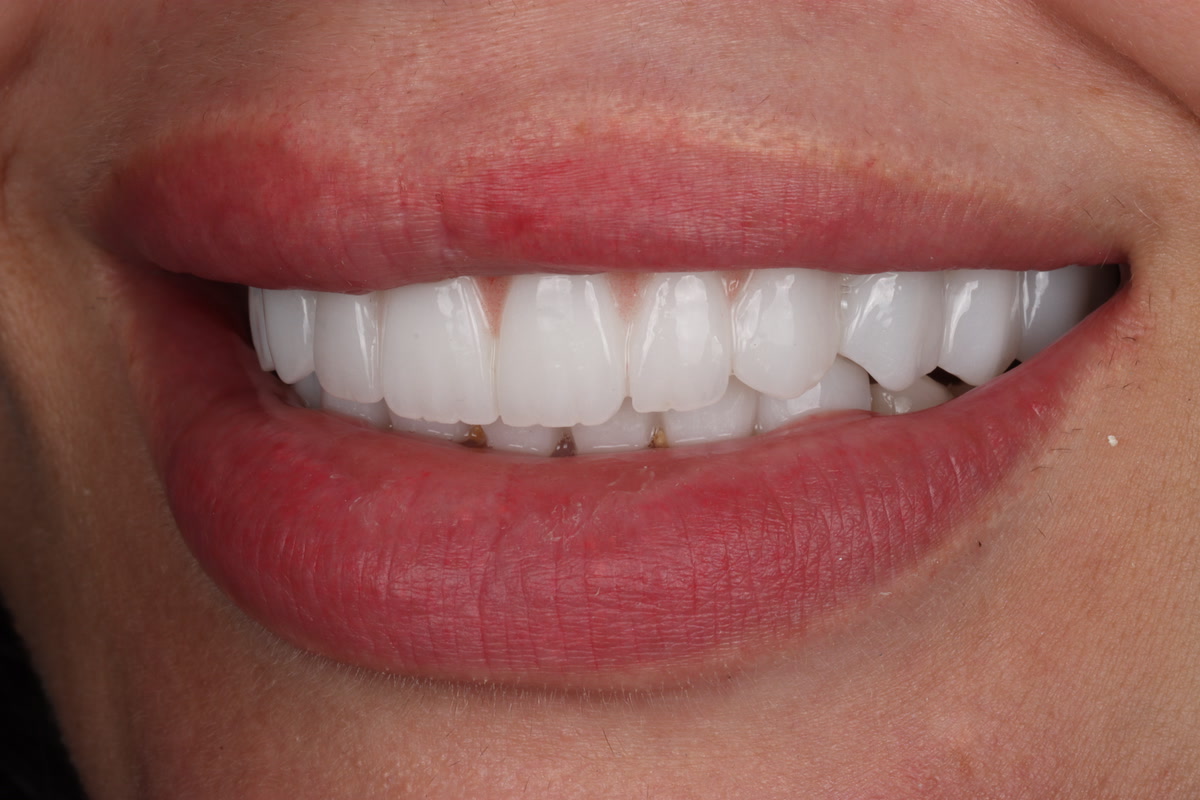
The whitest available shade is very rarely the best choice. Teeth that are uniformly bright white, all exactly the same, with no variation at all, tend to announce themselves. They pull attention to the teeth rather than to the person. People notice the dental work before they notice your face.
What I aim for instead is a shade that’s clearly brighter than where you started, but still reads as yours. Natural teeth aren’t a single flat colour — they’re slightly more translucent at the edges, slightly warmer near the gum. Reproducing some of that is what makes a result convincing.
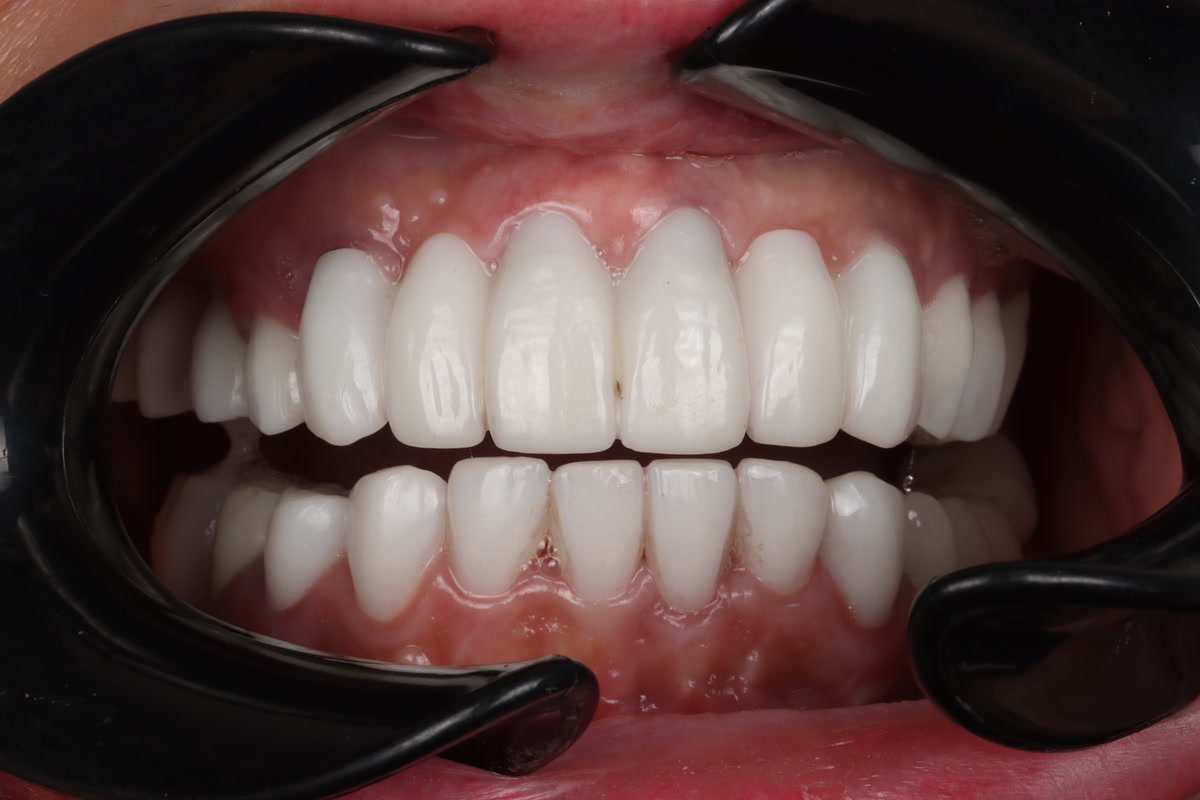
My preference is for a smile that makes people say you look well, not one that makes them say you’ve had your teeth done. That’s the whole difference.
What “Beautiful” Actually Means Here
A beautiful smile, in my view, is one that:
- Suits the proportions of your face
- Looks like it could have grown there
- Improves with your expression rather than fixing it in place
- Doesn’t change how people read you
That last one matters more than patients expect. A smile that’s too large, too white or too uniform doesn’t just change your teeth — it changes your whole appearance, and sometimes it changes how your face reads. That’s a bigger decision than most people realise they’re making.
So Should You Bring the Photo?
Yes. Please do.
Bring it, and let’s talk about it. I want to see what appeals to you — the brightness, the shape, the way the teeth are arranged. All of that is useful information.
What I’ll then do is tell you honestly which parts of it will suit you and which won’t, and show you what the alternative looks like. Sometimes patients are surprised to find that the version designed for their own face is the one they prefer once they see it.
The goal isn’t to talk you out of what you want. It’s to make sure that what you get still looks like you, on the day and in ten years.
Explore the options on our cosmetic dentistry and porcelain veneers pages — or read about what whitening can and can’t do if you’re not sure veneers are the right step.
Book a consultation at Camellia Polyclinic, Michel Zakhour St., Beirut — call or WhatsApp +961 71 567 894.